


Family Law — Legal Doctrine
Custody vs. Guardianship in Pakistan: The Legal Distinction, Case Law & Out-of-Court Agreements
“Custody” and “guardianship” are often used as if they mean the same thing. In Pakistani law they don’t — the Guardians and Wards Act, 1890 defines guardian but never actually defines custody, leaving the courts to work out the distinction case by case. This page sets out how they’ve done that, and answers one question we’re asked often enough to deserve its own page: does an agreement between parents about custody, made outside court, actually mean anything?
This is a doctrinal companion, not a general guide. For the practical side of a custody case — the welfare test, who can apply, visitation, process, and fees — see our Child Custody and Guardianship overview.
How Pakistani courts have actually defined custody and guardianship, what the Guardians and Wards Act says about a “ward,” and whether a private custody agreement between parents holds up if one side later disputes it.
Custody vs. Guardianship Defined
Out-of-Court Agreements
Why “Custody” Has No Statutory Definition
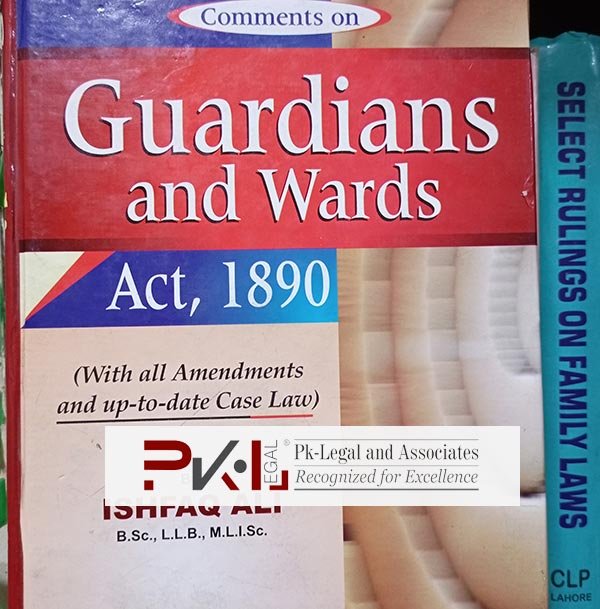
The Guardians and Wards Act, 1890 defines “guardian” in Section 4(2), but the word “custody” itself is never defined anywhere in the Act. That gap has been filled entirely by the courts, over more than a century of judgments, working out what custody actually means as cases came before them.
Custody Isn’t Limited to a Biological Parent
For a full discussion of how relatives and other third parties can seek custody or guardianship, see our guide to third-party and relative guardianship.
How Courts Have Defined Custody
Four decisions, spanning several decades, show how the courts have approached the question differently depending on the facts in front of them.
Actual, Not Constructive Custody
Mst. Atia Waris v. Sultan Ahmed Khan, PLD 1959 Lahore 205 — held that custody means actual custody, not a constructive or notional claim to it.
Custody as Protective Possession
Jumna Khan v. Mst. Gull Ferosha, PLD 1972 Peshawar 1 — took a broader view, defining custody as actual or constructive possession for the purpose of protecting the child.
Custody as Upbringing
PLD 1988 Karachi 252 — described custody as the right to the upbringing of a minor child, held by the mother or by whoever is legally entitled to it.
Guardianship Without Physical Possession
Bushra Asghar v. Dr. Rehmat Ali and 3 others, 2012 MLD 1755 — held that guardianship includes the duty to care for a minor even where the guardian doesn’t have physical possession of the child.
What Does “Ward” Mean Under the Act?
A “Ward” is the term the Act uses for the minor (or, in some cases, another dependent adult) who is the subject of the guardianship proceedings — the person the court is deciding care arrangements for. A Guardian Judge appoints a guardian over a ward where the ward is unable to care for themselves, whether because of age, incapacity, or another recognised reason.
The Assumption Behind a Guardianship Claim
Read together, Sections 7, 17, 19, and 41 of the Act reflect a working assumption: that a child’s welfare is generally best served by the natural father remaining guardian, unless he’s found unfit for that role. This is a starting assumption written into how the Act is structured, not a separate rule that overrides the welfare test itself.
The General Practice, and Why It Isn’t a Rule
In practice, when parents separate, custody of a nursing or very young child is commonly given to the mother, while the father is given responsibility as guardian of the child’s person and property — a pattern reflected in PLD 2009 SC 751.
Considering a Custody Agreement?
Talk to us before you sign anything privately — get it right the first time, in a form that will actually hold up.
Does Pakistan Have Adoption Law?
Western-Style Adoption
- Creates a new legal parent-child relationship
- Typically changes the child’s legal name and lineage
- Gives automatic inheritance rights from the adoptive parent
- Not recognised under Pakistani or Islamic personal law
Kafalah / Guardianship in Pakistan
- Provides care and upbringing without changing legal parentage
- The child’s biological name and lineage are preserved
- No automatic inheritance — a guardian can still leave a bequest by will
- Arranged through the Guardians and Wards Act, 1890
A Lahore High Court decision, Miss Fauzia Iqbal v. Farhat Jahan (PLD 2015 Lahore 401), reinforces this distinction directly — the court considered a minor who had been raised by her paternal aunt since infancy, and confirmed that guardianship, not adoption, was the operative legal relationship, deciding the matter on the child’s welfare and established bonds rather than treating the arrangement as an adoption.
Are Out-of-Court Custody Agreements Legally Binding in Pakistan?
Parents sometimes agree privately on custody — often to avoid the cost and stress of a court case — and assume that agreement settles the matter. Under Pakistani law, that assumption is risky.
The Guardian Court Has the Final Word
A Guardian Court remains the final arbiter of any custody dispute, regardless of what parents may have privately agreed. A parent lawfully holding custody who is deprived of it isn’t prevented from seeking a remedy simply because an agreement exists.
Unconscionable Agreements Are Presumed Coerced
Where an agreement — particularly one signed by a mother handing over custody — appears unconscionable on its face, courts have applied a rebuttable presumption that it resulted from coercion or undue influence, rather than genuine free consent.
The Welfare Test Still Governs
Under Article 199 of the Constitution, the High Court exercises a parental jurisdiction that isn’t limited by any private agreement — its focus remains the welfare of the minor and preventing harm from a breakdown in the family relationship.
Related Custody Guides
Child Custody & Guardianship Overview
The welfare test, who can apply, visitation, jurisdiction, documents, and our process.
Custody Advice for Mothers
Whether Khula affects custody, the Hizanat presumption, and what courts actually look at.
Father’s Custody Rights
What a father retains without custody, when he can obtain it, and the remarriage and age-seven myths corrected.
Frequently Asked Questions
What’s the actual legal difference between custody and guardianship?
Guardianship is defined by statute under Section 4(2) of the Guardians and Wards Act, 1890, and generally includes custody unless a court has separately awarded custody to someone who isn’t the guardian. Custody itself has no statutory definition — courts have defined it through case law as actual possession, protective possession, or the right to upbringing, depending on the case.
Can a parent hold guardianship without physical custody?
Yes. Guardianship includes the responsibility to care for a minor even where the guardian doesn’t have physical possession of the child — the two rights can sit with different people at the same time.
Is a private custody agreement between parents legally binding?
Not automatically. A Guardian Court remains the final decision-maker regardless of any private agreement, and an agreement that appears unconscionable can be presumed to have resulted from coercion or undue influence, which strips it of legal value.
Does the law assume the father should be guardian?
Sections 7, 17, 19, and 41 of the Act, read together, reflect a working assumption that a fit father remains guardian — but this is a starting point the welfare test can override, not an automatic entitlement.
What does “Ward” mean in the Guardians and Wards Act?
A Ward is the minor (or dependent adult) who is the subject of guardianship proceedings — the person a Guardian Judge appoints a guardian over, due to age, incapacity, or another recognised reason.
Can only a biological parent get custody of a child?
No. Pakistani courts have awarded custody to grandparents, aunts, and other relatives where neither parent is available or suitable. The deciding factor is always the child’s welfare, not the applicant’s biological relationship to the child.
Does Pakistan have a law of adoption?
No, not in the Western sense. Pakistan recognises Kafalah — a form of guardianship that provides care and upbringing without creating a new legal parent-child relationship, changing the child’s name or lineage, or granting automatic inheritance rights. Arrangements are made through the Guardians and Wards Act, 1890.
Contact PK-Legal & Associates
Speak to a Family Lawyer
Whether you’re weighing a private agreement or considering a court petition, get advice before you commit to either.
+92 321 5256 865
+92 331 9999 129
info@pklegal.org
9:00 AM to 10:00 PM (Only on regular working days)